



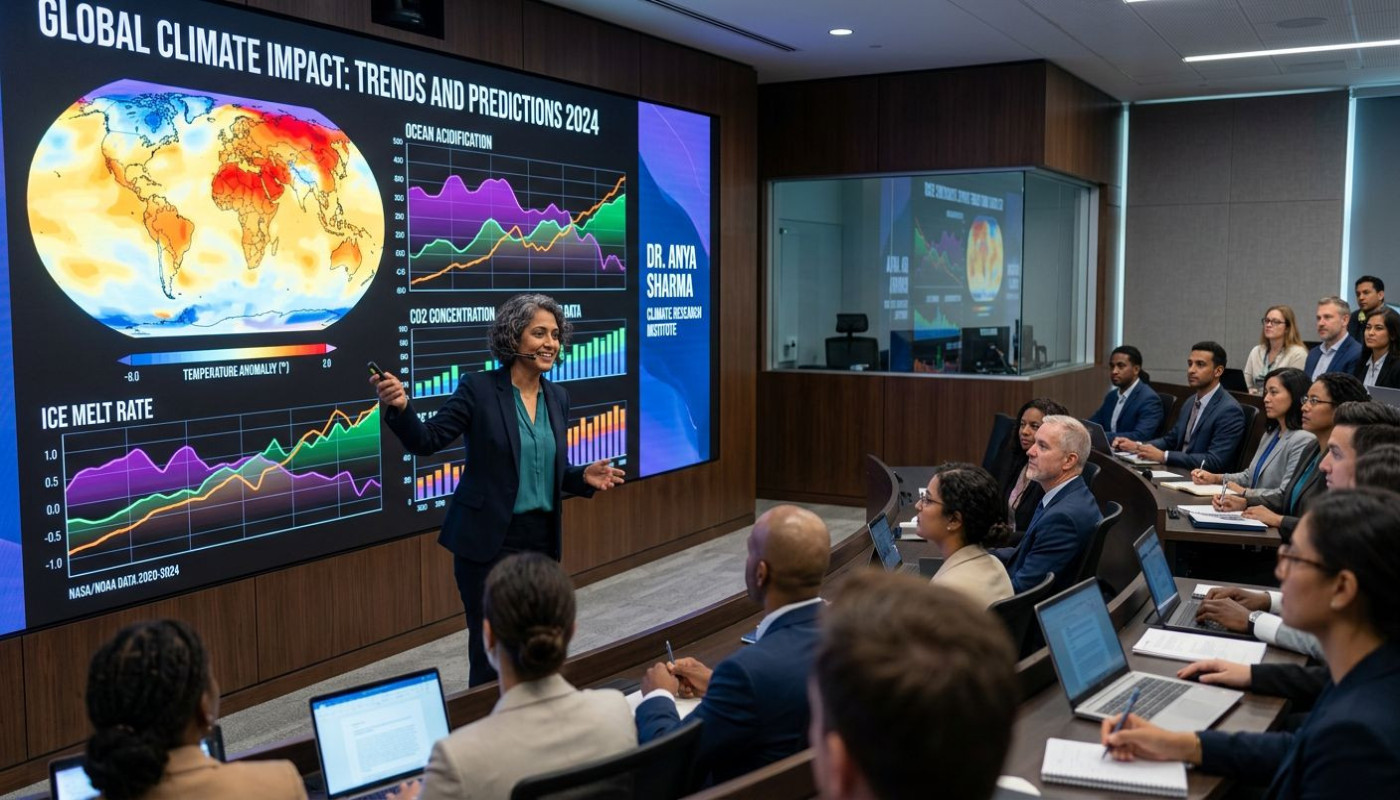
Business conferences have traditionally depended on speakers, presentations, and carefully prepared information to communicate ideas. Today, however, simply presenting useful information is rarely enough to hold an audience’s attention for hours. Attendees expect an experience that makes complex ideas easier to understand and important moments easier to remember. Visual storytelling helps accomplish this by turning information into something audiences can see, follow, and emotionally connect with.
Rather than treating screens and graphics as background elements, modern conference producers can use them as part of the narrative itself. When visuals evolve alongside a presentation, an ordinary business session can become a coordinated experience with a clear beginning, progression, and conclusion.
Giving Abstract Business Ideas a Visual Identity
Many conference topics involve concepts that are difficult to demonstrate physically. Growth strategies, organizational transformation, market expansion, and future plans may involve large amounts of information that audiences cannot immediately visualize.
Creative visual storytelling gives these concepts a recognizable identity. For example, a company’s transformation could be represented through changing imagery as a speaker moves from past challenges to current achievements and future ambitions. Instead of asking attendees to mentally organize dozens of individual facts, the presentation gives them a visual framework they can follow.
This approach is particularly valuable when businesses need to communicate complicated ideas without overwhelming attendees.
Creating Visual Transitions Between Conference Chapters
A conference itself can be treated like one continuous story rather than a collection of unrelated presentations. Opening sessions, executive speeches, panel discussions, product demonstrations, and closing remarks can each represent different chapters.
Visual transitions help connect these chapters. Changes in screen content, motion graphics, lighting, stage imagery, and presentation layouts can quietly signal that the audience is entering another part of the program.
Working with an experienced audio visual company in Orlando can help organizers coordinate these elements so that technical changes support the conference narrative rather than interrupting it. When transitions feel intentional, attendees experience a more polished and cohesive program.
Making Numbers Feel Meaningful
Business conferences frequently contain financial results, performance metrics, survey findings, and market statistics. A presentation filled with static charts can quickly become difficult to absorb, especially when attendees encounter data repeatedly throughout the day.
Visual storytelling changes the purpose of data presentation. Instead of displaying every available number, presenters can reveal information progressively. A graph might develop as the speaker explains what caused a change, while an important figure can appear precisely when its significance becomes clear.
The audience therefore follows the reasoning behind the data rather than simply looking at the final result.
Directing Attention Without Saying a Word
One overlooked advantage of visual storytelling is its ability to guide attention naturally. Conference audiences constantly decide where to look, particularly on large stages containing speakers, screens, scenic elements, and presentation displays.
Thoughtful production can establish a visual hierarchy. Screens can become quieter during personal stories, while important announcements can receive stronger visual emphasis. Lighting and imagery can also shift attention toward a speaker, demonstration, or specific stage area.
These subtle decisions reduce visual competition and help attendees concentrate on what matters at each moment.
Giving Speakers a More Dynamic Environment
Visual storytelling also changes how speakers interact with the stage. Instead of standing beside slides containing paragraphs of information, presenters can become part of a larger visual environment.
Background imagery can change according to the topic being discussed. Key phrases can appear at carefully selected moments, while animated sequences can introduce new sections. This creates opportunities for speakers to communicate through both their words and their surroundings.
The result can feel closer to a carefully produced live experience than a conventional business presentation.
Building Memories Beyond the Closing Session
People rarely remember every statistic or sentence they hear during a conference. They are more likely to remember distinctive moments and the emotions associated with them.
That makes visual storytelling particularly valuable. A striking opening sequence, an unexpected visual transformation, or a carefully coordinated closing moment can become a mental reference point for the entire event.
When conference organizers combine business information with purposeful visual narratives, presentations become easier to follow, and experiences become more memorable. Visual storytelling does not replace strong speakers or valuable content. Instead, it gives those elements a clearer structure and stronger presence, transforming a business conference from a series of presentations into one connected experience.